
Home ›
How to make viral 80’s image
How to make viral 80’s image
ChatGPT
Updated 2026-09-19
Create trending 80s-style images with AI using our viral image editing prompt. Get retro vibes, vintage colors, cinematic effects
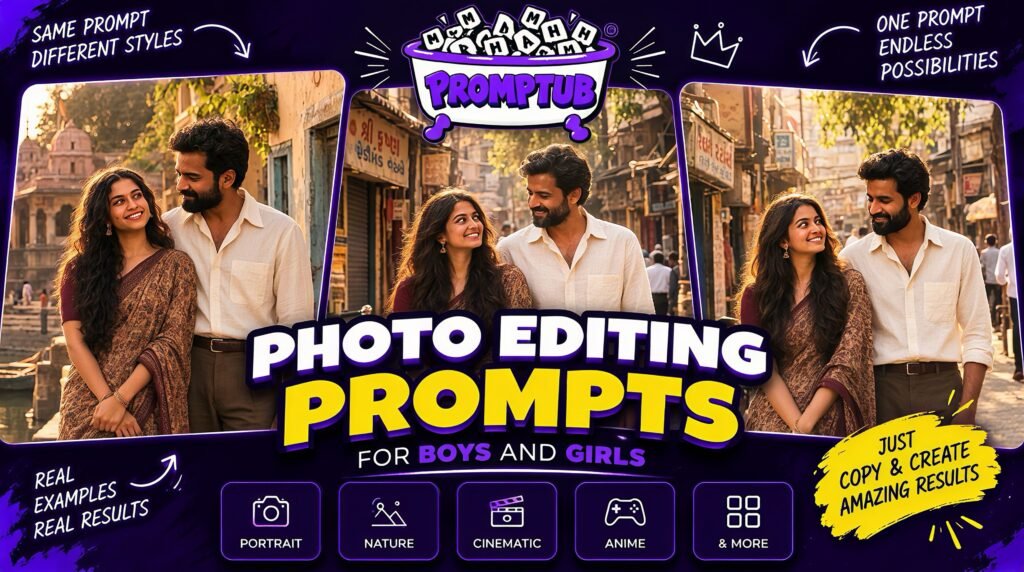
Example output — this is what the prompt produced. 16:9 aspect ratio.
More results from this prompt
The prompt
8,449 characters
Create one ultra-photorealistic vertical 9:16 cinematic photograph of the two people from the uploaded facial reference image.
IMPORTANT REFERENCE RULE: Use the uploaded image ONLY for facial identity. Do not copy its hairstyle, clothing, body, pose, background, lighting, camera angle, or composition. Recreate the two people as the same recognizable individuals while following every visual instruction below.
FACIAL IDENTITY — ABSOLUTE PRIORITY
Preserve each person's exact recognizable identity: face shape, proportions, forehead, eyebrows, eyes, eye spacing, nose structure, lips, cheekbones, jawline, chin, ears, natural skin tone, facial asymmetry and apparent age. Do not beautify, reshape, feminize, masculinize, age, de-age or redesign their faces. Preserve realistic pores, skin texture and natural imperfections. Both faces must unmistakably look like the same people from the uploaded reference.
SCENE & COMPOSITION
Create a romantic, nostalgic Indian street-fashion photograph with a naturally occurring, believable old-India atmosphere.
IMPORTANT: RANDOMIZE THE LOCATION ON EVERY GENERATION. Do not reuse, replicate or lock the background to one specific street or neighborhood. Each generation must feature a visibly different Indian location, architecture, street layout, background arrangement and environmental details, while maintaining the same nostalgic romantic cinematic feeling.
Possible environments may include, but are not limited to: a narrow heritage lane, old residential street, traditional bazaar, quiet temple-side lane, historic haveli neighborhood, old textile-market street, weathered town square, vintage railway-side neighborhood, old Gujarati/Rajasthani street, colonial-era Indian street, traditional market alley, old courtyard passage, small-town roadside, heritage neighborhood with balconies, or another believable Indian setting.
Choose the setting organically and vary it substantially every time. Change building architecture, colors, shopfronts, street width, pavement, signs, vegetation, vehicles, background objects, architectural era and spatial arrangement between generations. Never create the same recognizable location twice.
The background must support the subjects rather than overpower them.
The woman stands on the LEFT, slightly closer to camera. The man stands on the RIGHT, slightly behind her. Both are visible from head to below the knees, almost full-body. Their bodies are naturally close together.
The woman faces generally toward camera while turning her head slightly toward him and looking upward at him with a soft, shy affectionate expression. Her hands are gently clasped in front of her lower torso with naturally crossed wrists.
The man stands relaxed beside her, torso mostly toward camera, head tilted downward toward the woman, looking at her with a subtle affectionate expression. One arm rests naturally by his side while the other stays close to her without an exaggerated embrace.
Neither person looks at the camera. Their eye contact is the emotional focal point. The pose must feel candid and natural, never staged.
WOMAN — STYLING
She wears a vintage-inspired Indian saree in muted beige/taupe-brown, with a dense traditional floral/vine pattern in burgundy, dusty rose, olive, cream and faded red, finished with a dark maroon/burgundy border. Lightweight fabric with realistic pleats, folds, wrinkles, overlapping layers and natural gravity.
Pair it with a fitted deep burgundy short-sleeve blouse, simple neckline and understated vintage styling.
Add small antique-gold/brass jhumka earrings and several thin traditional gold-colored bangles on both wrists. No necklace or flashy jewelry.
Natural Indian makeup: subtle kajal, naturally defined brows and lashes, muted rosy/nude lips, minimal cheek color and a small dark traditional bindi. Keep skin authentic and unfiltered.
Her hair is very long, thick, dark brown/near-black and naturally wavy, worn loose with voluminous roots, large soft waves, slightly tousled texture, individual strands, flyaways and loose strands framing her face. Hair cascades over the saree toward the waist/hip.
MAN — STYLING
He wears a relaxed retro Indian outfit: warm ivory/off-white lightweight button-down shirt, slightly oversized, natural cotton/linen texture, pointed collar, top two or three buttons open and realistic wrinkles.
He wears high-waisted brown/olive-brown straight-leg trousers, dark brown leather belt and simple rectangular metallic/brass buckle. Natural creasing around hips and knees.
His hair is thick, dark and naturally voluminous, slightly wavy and softly parted, with a classic vintage Indian appearance. No fade, undercut or modern gel styling.
Add a natural short-to-medium dark beard and moustache with visible individual hairs. No sunglasses or flashy accessories.
BACKGROUND — RANDOMIZED EVERY TIME
Create a unique Indian environment for every generation.
Do not repeat the same buildings, street, architecture, vehicle placement, signs, tree placement, color scheme or background composition from previous generations.
The environment should contain believable imperfections such as weathered walls, aged paint, old balconies, wooden doors, shutters, electrical wires, faded advertisements, local businesses, pavement texture, street clutter, parked vehicles and distant pedestrians — but randomize which elements appear and where they appear.
A vintage motorcycle or scooter may appear somewhere naturally in the environment, but its position, model, color and visibility should vary between generations.
Vegetation should also vary naturally: mature trees, hanging branches, courtyard plants, palms, vines, or sparse greenery depending on the selected location.
Avoid modern glass buildings, neon-heavy streets, contemporary luxury storefronts, futuristic architecture or obviously AI-generated environments.
The background must look like a completely different real Indian location each time while the couple remains visually consistent.
LIGHTING & ATMOSPHERE
Use warm late-afternoon golden-hour sunlight, naturally adapted to the randomly selected environment.
Create natural golden rim light around their hair and shoulders, warm facial illumination, subtle dappled sunlight, realistic shadows, gentle atmospheric haze and warm highlights on the saree.
Lighting direction, shadow patterns and environmental reflections may vary naturally between generations.
Mood: romantic, nostalgic, intimate and timeless.
CAMERA & COLOR
Professional full-frame camera look, vertical 9:16, 35–40mm lens, realistic perspective, moderate depth of field.
Extremely sharp faces and primary clothing details, gradual optical background blur and subtle natural bokeh. No fisheye distortion, excessive wide-angle stretching or artificial cutout effect.
Warm vintage film palette using beige, brown, burgundy, faded olive, ivory and amber. Very fine natural film grain, gentle highlight roll-off, slightly lifted shadows and restrained contrast.
Keep skin tones realistic. No excessive orange grading, HDR, beauty filters or heavy Instagram effects.
REALISM
Maximum photorealism: accurate anatomy, natural proportions, correct hands and fingers, realistic skin pores, individual hair strands, authentic fabric texture, believable jewelry, physically accurate shadows and realistic saree physics.
No extra fingers, duplicated limbs, distorted hands, warped faces, plastic skin, CGI appearance, cartoon styling, floating fabric, unnatural anatomy or artificial beauty-filter effects.
VARIATION PRIORITY
The people, facial identity, clothing, relationship, pose and overall cinematic mood must remain consistent.
The location must NOT remain consistent.
For every new generation, independently create a fresh Indian environment with substantially different:
architecturestreet layoutbuilding colors and texturesshop/residential structuresbackground objectsvegetationvehiclessignagedepth and perspectiveenvironmental compositionlighting interaction with the surroundingsDo not use the previous generation's background as a template. Treat every generation as a new location and a new cinematic scene.
Final image: one single ultra-photorealistic 9:16 cinematic photograph, candid, romantic and authentic, resembling a beautifully captured frame from a nostalgic Indian romance film. No collage, split screen, text, watermark, border or social-media UI.
How to use this prompt
1
Copy itOnce it unlocks, hit Copy prompt and the whole thing lands on your clipboard.
2
Upload your photoOpen ChatGPT and attach the photo you want to work from.
3
Paste the promptSend it in the same message as the photo, as one block — do not split it across messages.
4
IterateNot happy with the result? Change one thing at a time — the lighting, the angle, or the mood.